
INCA Case Study: Northfield House, Bristol
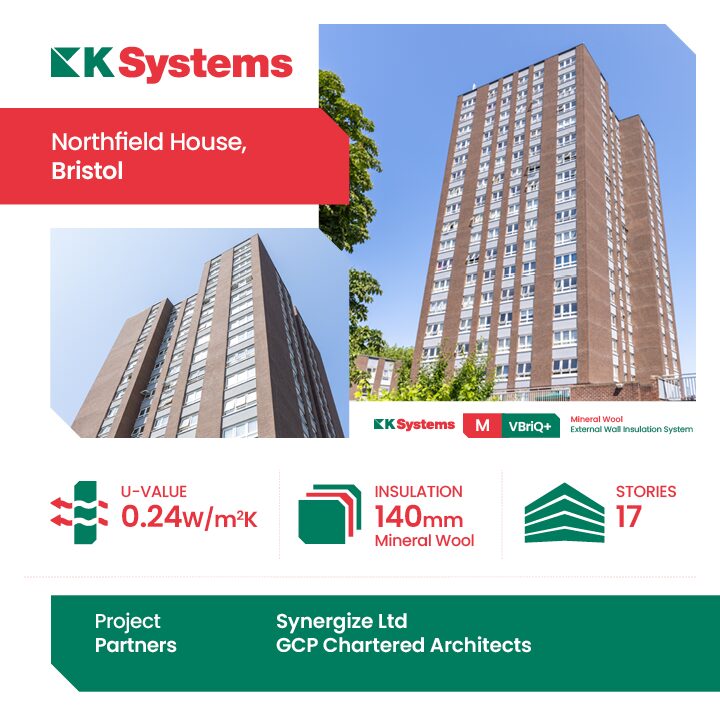
Northfield House, Bristol
Project Type: Refurbishment
Building Type: High Rise, Residential
Architect: GCP Chartered Architects
System Designer: K Systems
Installer: Synergize Ltd
System & Finish: K Systems M & VBriQ+ Clay/Acrylic Brick Slips & Silkolitt+
U-Value Before: N/A
U-Value After: 0.24 W/m²K
Overview
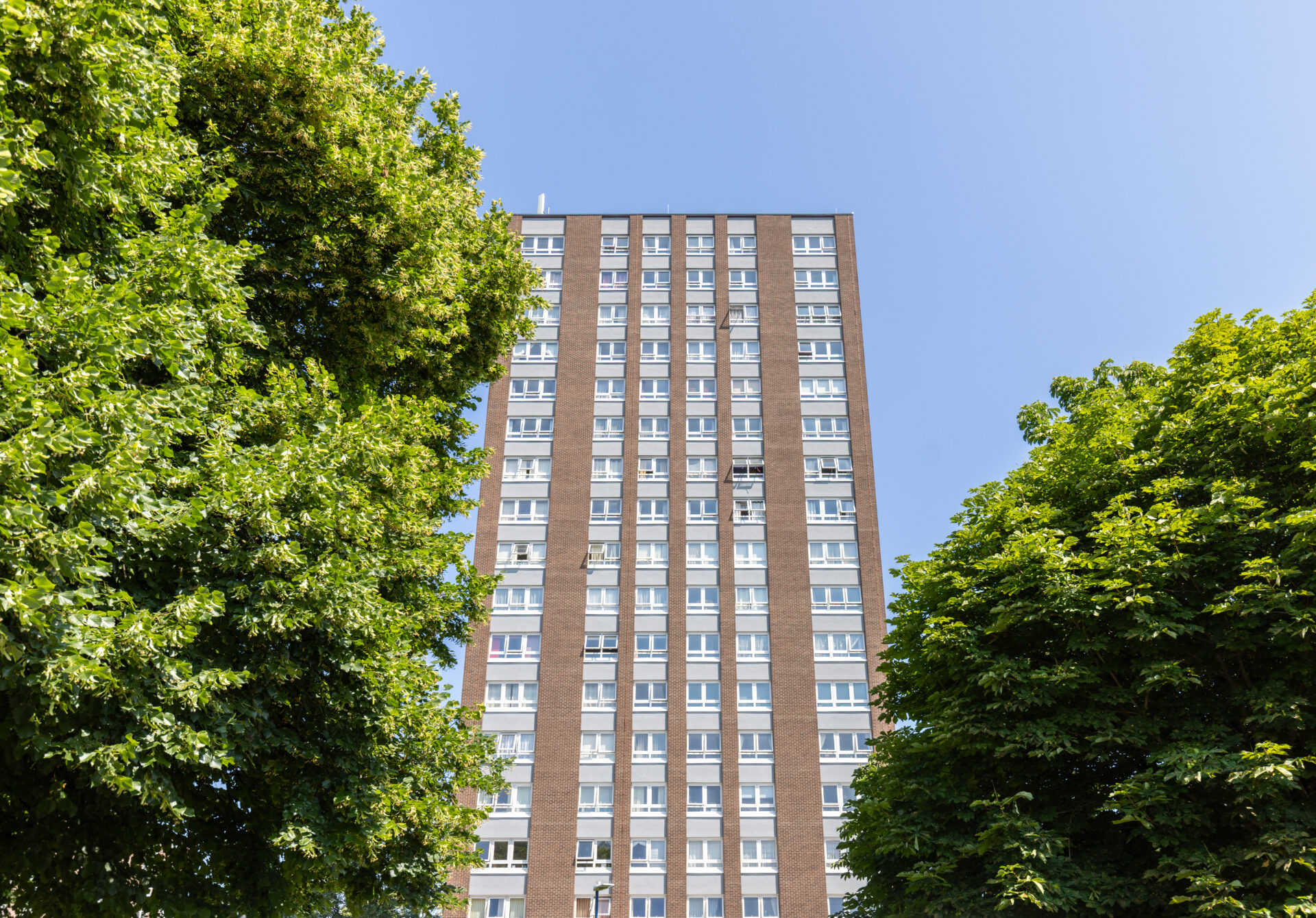
K Systems’ Northfield House project – a high-rise residential retrofit in Bristol – demonstrates technical excellence, innovation, and the highest safety standards in EWI application.
Faced with significant construction challenges and stringent safety expectations, K Systems delivered a tailored external wall insulation solution that combined aesthetics, safety, and performance, setting an industry benchmark for similar projects.
The challenge
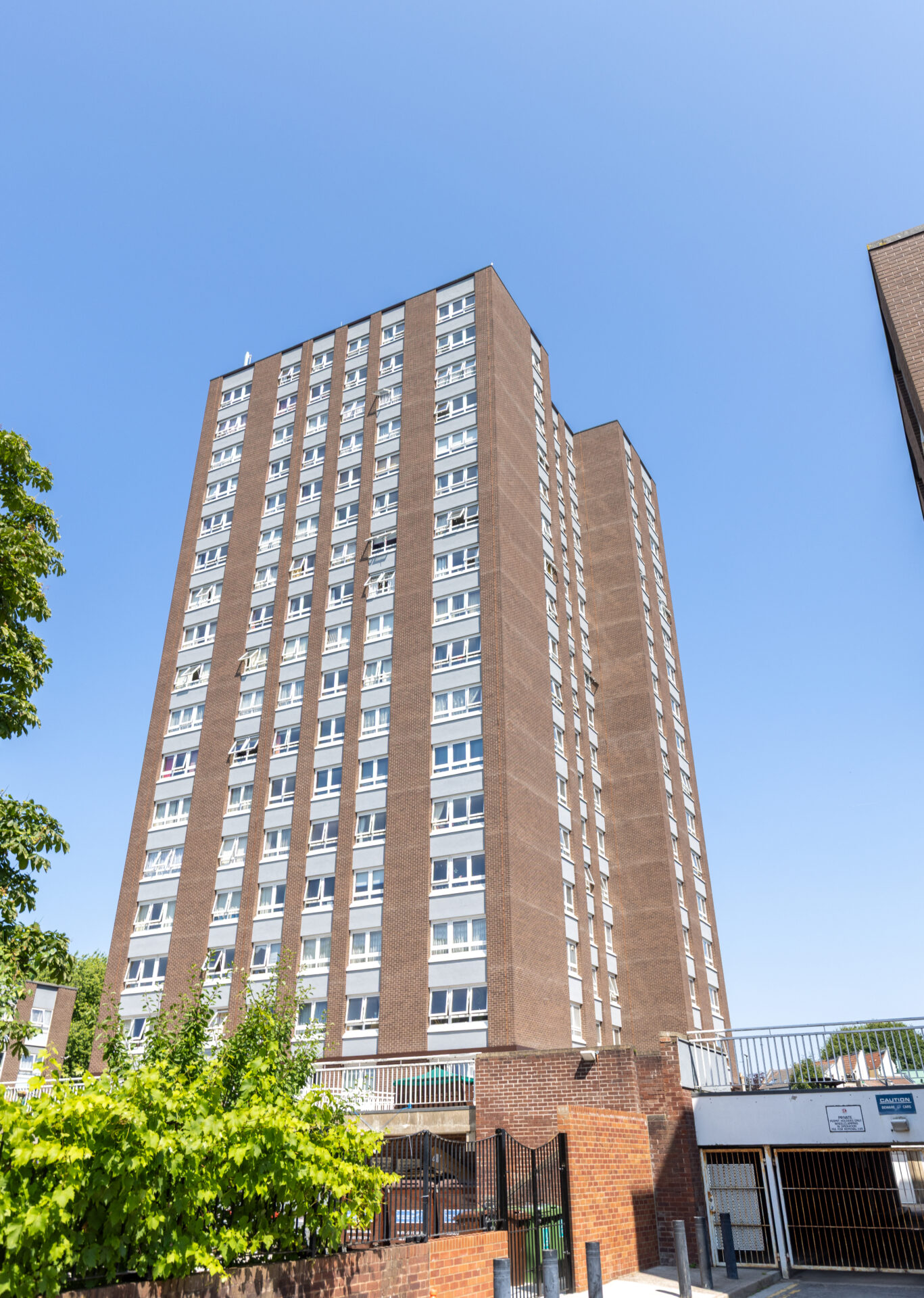
Northfield House presented a complex refurbishment . The 17-storey social housing block had previously been fitted with a combustible White EPS EWI system that required full removal under revised fire safety regulations.
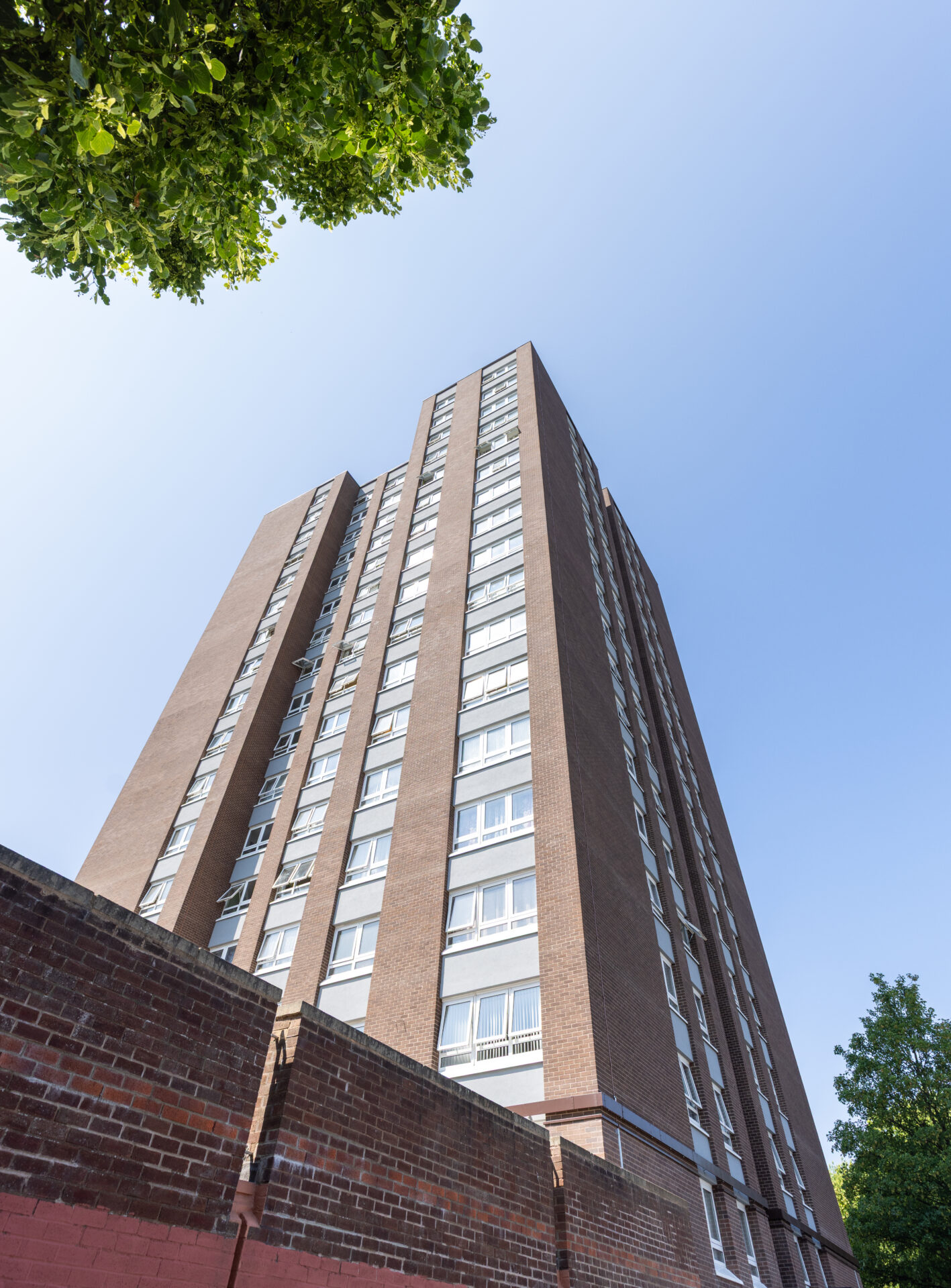
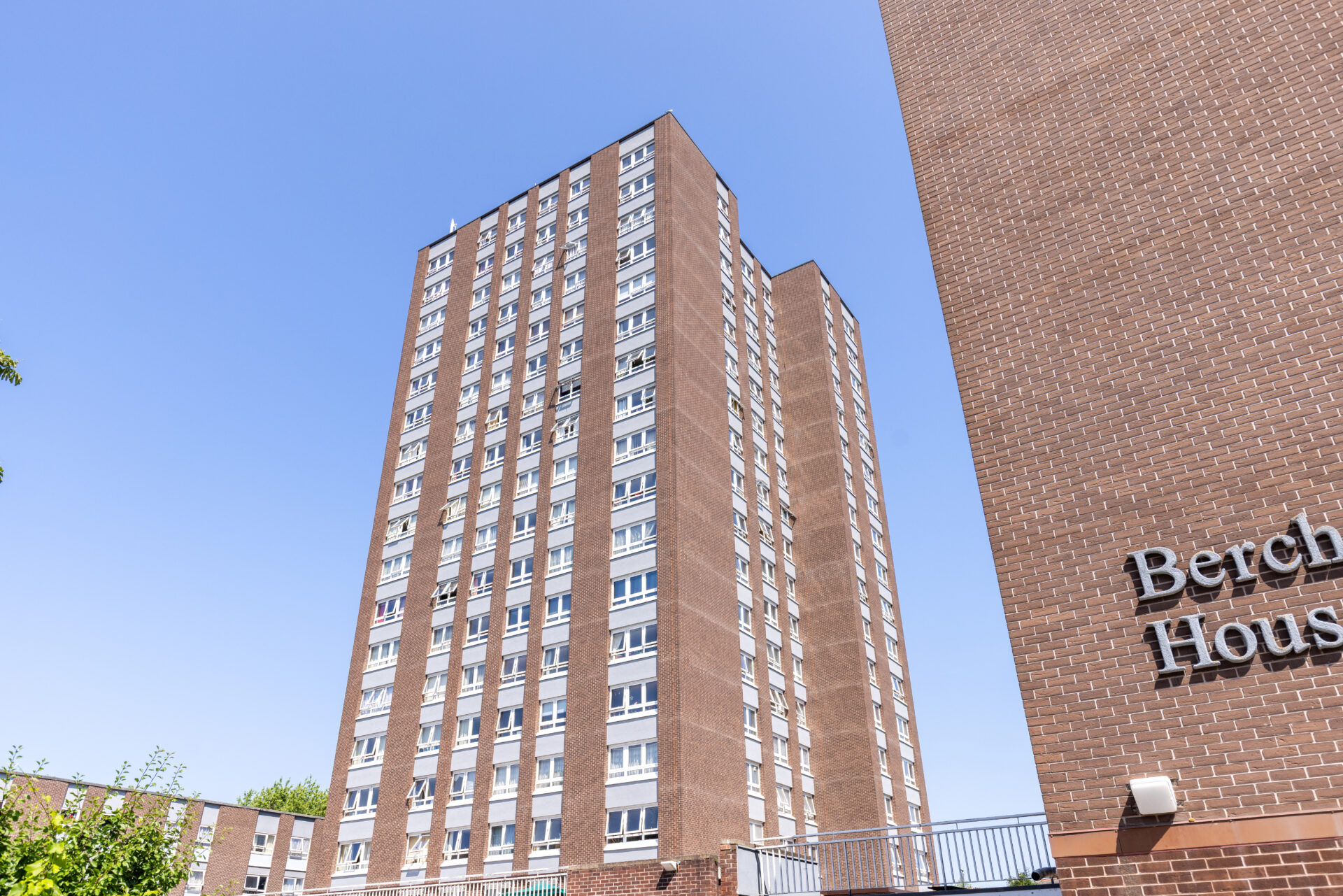
The structure’s unique design, built on a raised podium with an integrated resident walkway, introduced a major access and scaffolding challenge. Careful planning and coordination were critical to ensure safety, minimise disruption, and maintain accessibility for residents throughout the project.
System selection and specification
To meet the project’s demanding safety and performance requirements, K Systems specified its non-combustible K Systems M VBriQ+, an A1 classified non-combustible solution, utilising a light-weight clay brick-slip finish, was applied at ground level.With Category 1 impact resistance, it was ideally suited for the high-traffic and vehicle-prone zones around the podium. In addition to robust performance, it provided a clean, contemporary brick-effect aesthetic, in line with the architect’s vision.
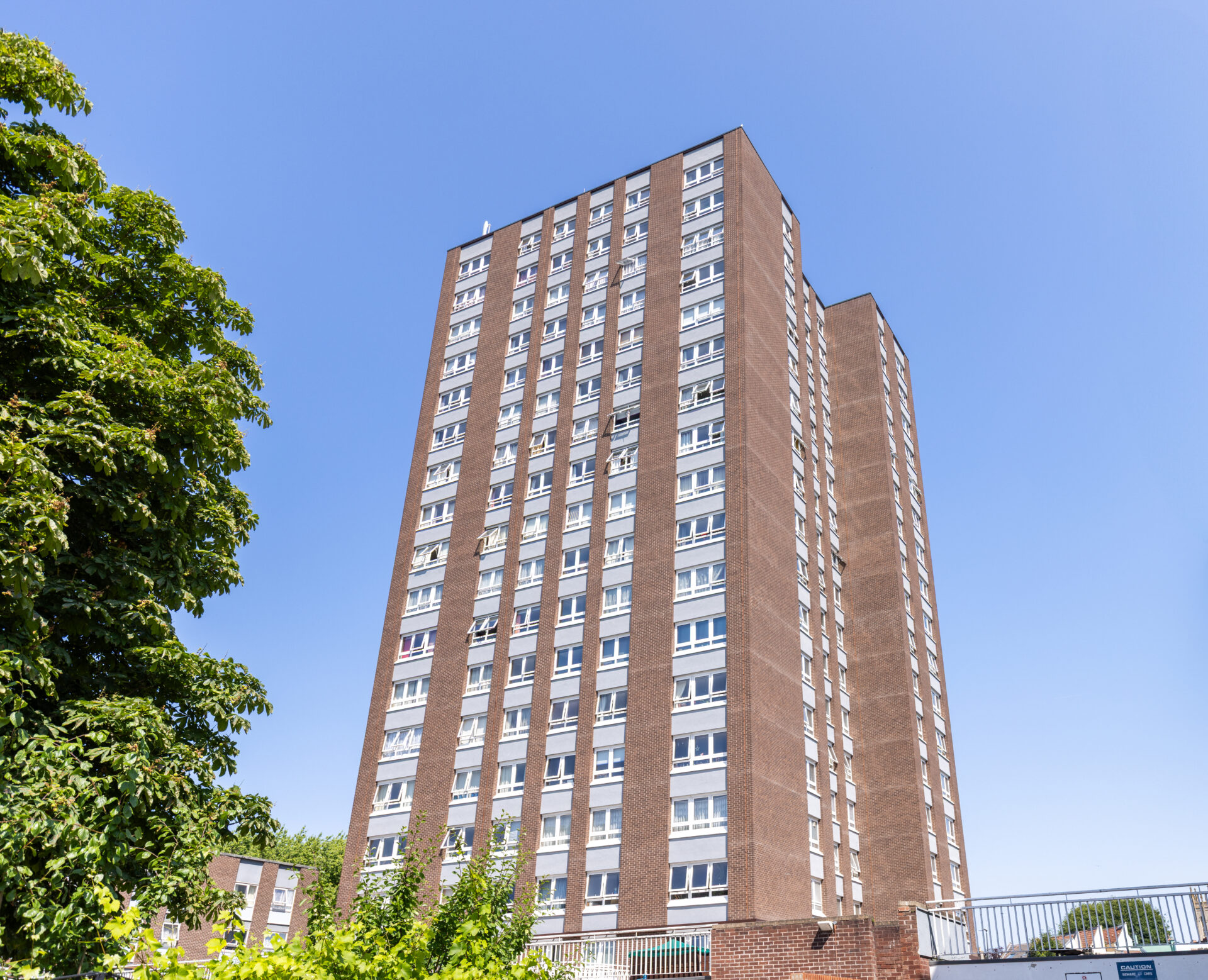
From the first floor upwards, VBriQ mineral acrylic brick-slips were selected for its lightweight construction, versatile aesthetic finish, ease of installation and cost efficiency – offering a balance of compliance, design freedom, and economic viability. The system offers an A2,s1-d0 fire classification and is therefore fully compliant with the latest fire regulations for high-rise residential use cases. The inclusion of Silkolitt+, a silicone-based render, below windows complemented the system by enhancing water resistance and contributing to the long-term durability of the façade.
The system also offers an A2,s1-d0 fire classification to ensure the safety of current and future building residents. With 140mm of mineral wool insulation, the system was fully compliant with current building regulations and met the specified U-value of 0.24W/m²K, dramatically improving thermal efficiency for residents while maintaining a breathable building envelope.
Project delivery and impact
Despite the complex podium design and live occupancy of the building, K Systems collaborated closely with Synergize Ltd and gcp Architects to deliver a solution that minimised disruption and met all programme milestones.
The three EWI systems used were selected to improve the fire safety of the building’s façade, retain a traditional brick construction aesthetic which matched the original character of the area, improve thermal efficiency and maximise the budget for the client.
The unique combination of Agrément certified EWI systems that K Systems could offer elevated this renovation to exceed expectations and provide residents efficient homes that they could be proud of.
To achieve aesthetic requirements, the VBriQ+ clay brick-slips and VBriQ mineral acrylic brick-slips were colour matched to create a seamless exterior appearance to the building. However, this allowed the robust VBriQ+ clay brick-slips to be selectively used on ground and lower floors, where they would be more prone to impact, whilst the more cost effective, easy to install and extremely light-weight VBriQ mineral acrylic slips could be installed above this, to maximise the available budget and retain compliance to current fire regulations.
The window details provided another opportunity to demonstrate the design capability of the K Systems technical team, with bespoke detail designs and interface designs generated to retain the appearance of recessed panels between windows.
This not only retained the original aesthetic of the building but also ensured thermal performance was not compromised, by carefully designing details to minimise cold-bridging risks at system interfaces and to existing building openings.
This project is a testament to how expert system design and product selection can overcome logistical and safety challenges in high-rise retrofit projects. By leveraging non-combustible, aesthetically versatile systems, K Systems contributed to transforming Northfield House into a safer, more efficient, and visually refreshed residential building.
Conclusion
The Northfield House project reflects K Systems’ leadership in the EWI sector, not only in the technical performance of our systems but in our ability to deliver compliant, cost-effective, and design-conscious solutions for complex retrofit projects.
As the industry continues to evolve in response to stricter safety legislation, K Systems remains at the forefront – setting new standards for EWI excellence across the UK.
This project is a testament to how expert system design and product selection can overcome logistical and safety challenges in high-rise retrofit projects. By leveraging non-combustible, aesthetically versatile systems, K Systems contributed to transforming Northfield House into a safer, more efficient, and visually refreshed residential building.