
INCA Case Study: Demesne Office Building, Castlerea
Demesne Office Building
Project Type: Refurbishment
Building Type: Low Rise, Non-Residential
Architect: N/A
System Designer: Atlas Building Materials
Installer: Nugent Construction
System & Finish: ATLAS ETICS + 200mm Graphite EPS
U-Value Before: N/A
U-Value After: N/A
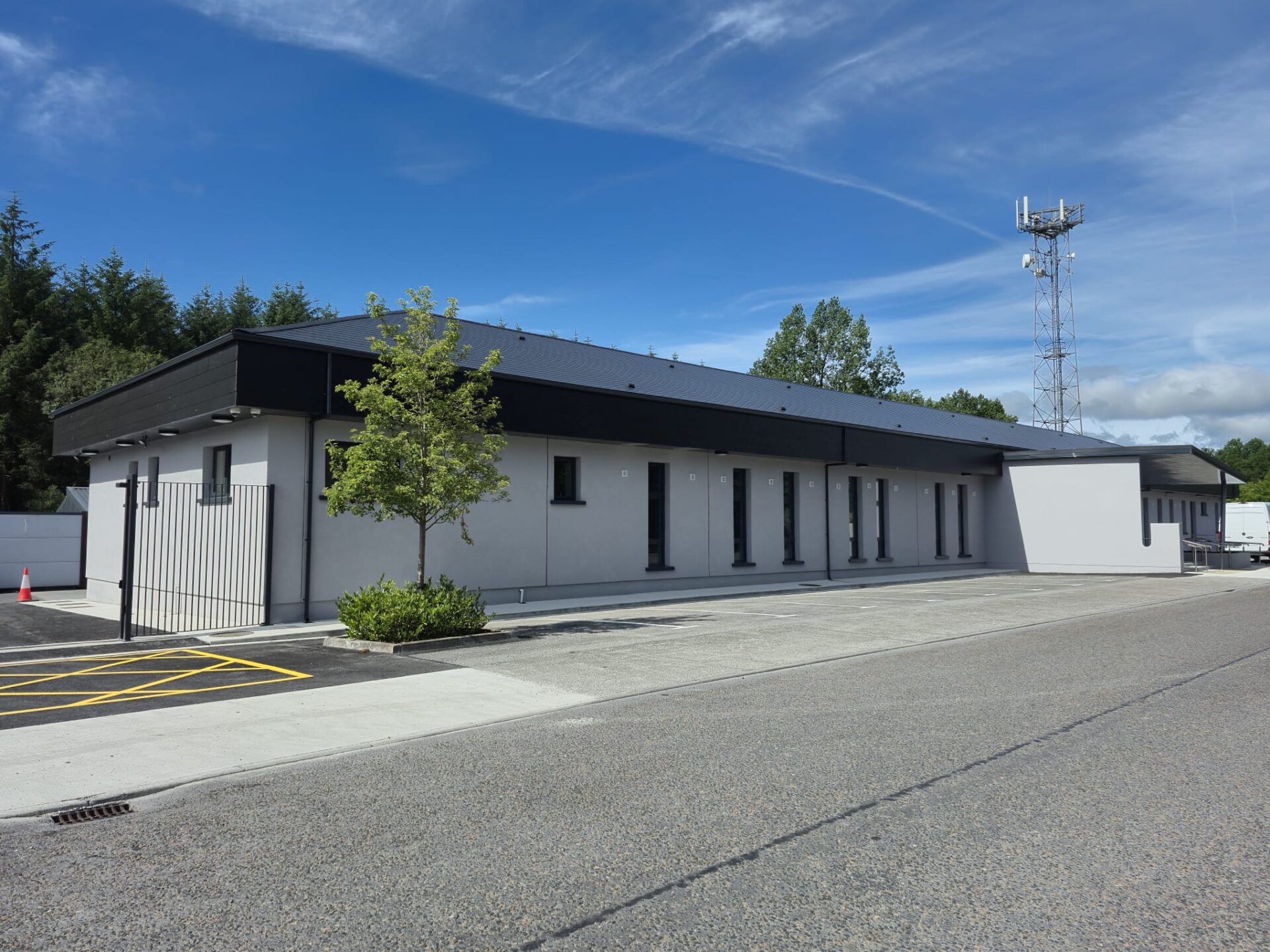
From Modest Office Block to Modern, Sustainable Workplace — The Transformation of a 1986 Commercial Building
Tucked away in a quiet urban setting, the single-storey office building constructed in 1986 stood as a modest relic of its time — practical in layout, sturdy in form, but built long before energy efficiency became a priority. It’s simple brick façade and rendered side and rear elevations reflected a no-nonsense approach typical of that era. While functional, the building lacked many of the performance features that are now considered essential for sustainability and comfort.
Originally used solely as office space, the structure was built with cavity walls containing just 50 mm of standard EPS insulation. Its pitched roof, finished with classic slate, offered minimal protection against heat loss — relying on a mere 50 mm of fibreglass laid over flat ceilings. Single-glazed aluminium windows and doors allowed significant thermal bridging, and with no insulation beneath the floor, the building struggled to retain warmth during the colder months.
But a new chapter began when the building underwent a complete energy retrofit — a transformation that not only brought it in line with modern environmental standards, but also reimagined its potential as a forward-looking workspace.
Breathing New Life into the Building Fabric
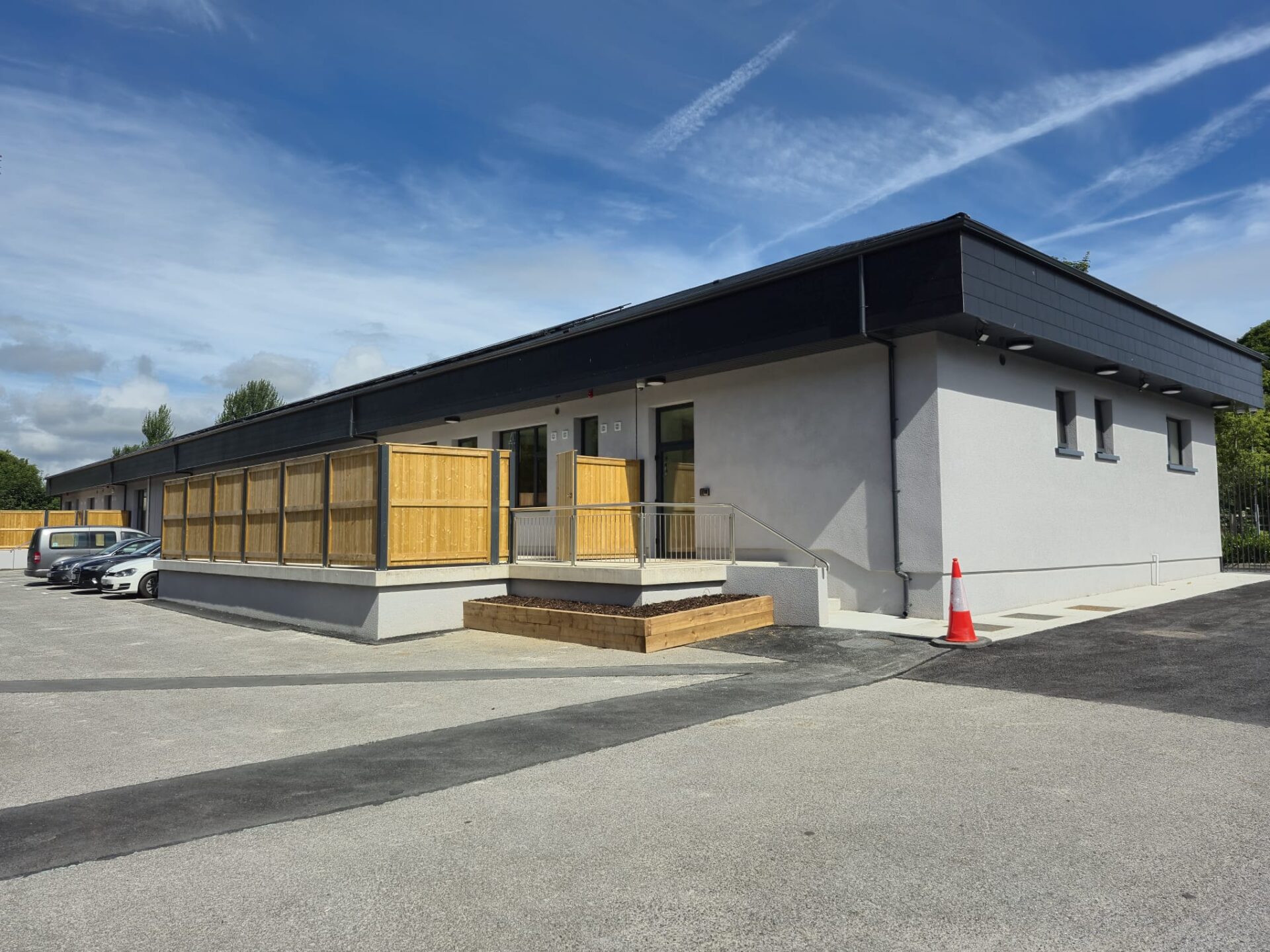
The energy upgrade began quite literally from the ground up. New 60 mm floor insulation was installed beneath a freshly poured concrete screed, improving thermal comfort from beneath. The outdated windows and doors were replaced with triple-glazed aluminium units, all thermally broken to eliminate cold bridging and improve air tightness throughout the envelope.
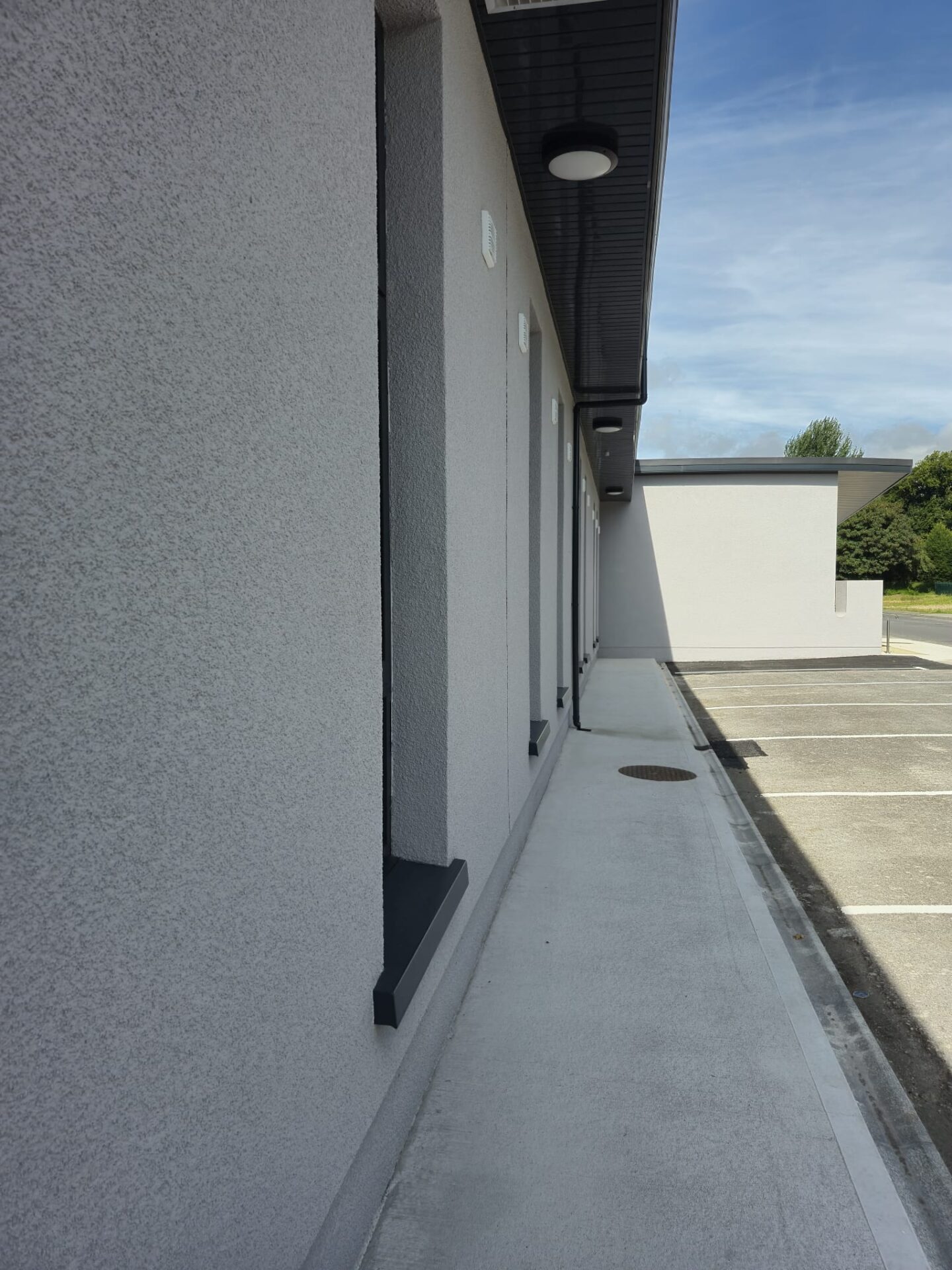
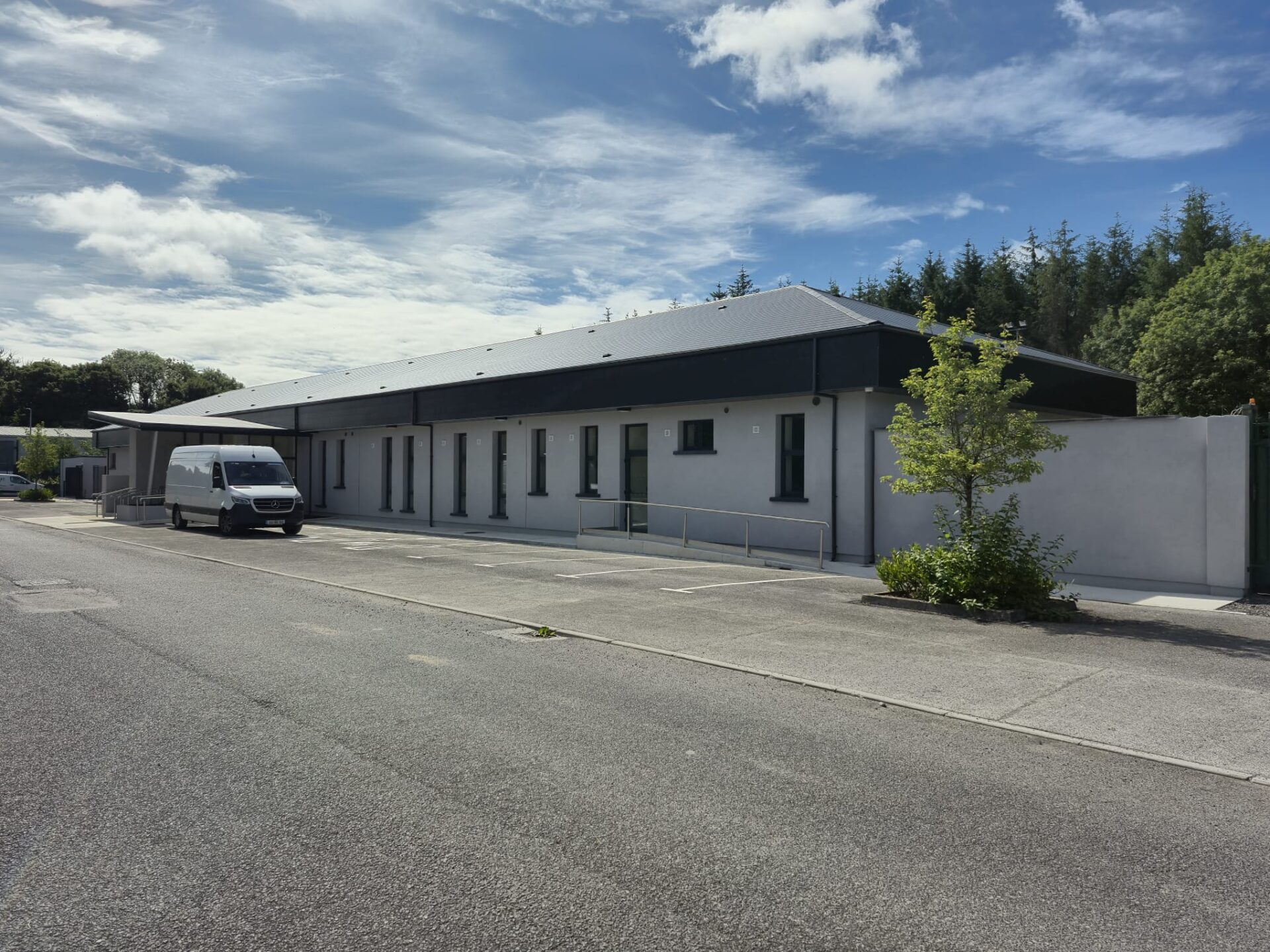
Attention then turned to the walls. A 200 mm graphite-enhanced EPS external wall insulation system was applied, finished with a sleek 2 mm silicone render that gave the building a clean, contemporary appearance. To maximise insulation, the original cavity wall was also upgraded with an additional 50 mm of bonded bead insulation — ensuring the entire structure performed as one cohesive thermal envelope.
Overhead, the ceiling insulation was increased dramatically to 300 mm of fibreglass, cutting heat loss through the roof to a fraction of its previous levels. The combination of external wall, roof, floor, and window upgrades radically improved the building’s energy profile — reducing both heat demand and emissions.
A Smarter Way to Heat and Ventilate
The mechanical systems also received a modern overhaul. The outdated heating setup was replaced with a high-efficiency air source heat pump, providing both heating and cooling as needed, while passive ventilation was introduced to maintain fresh air circulation without the energy penalty of mechanical extraction.
Fit for the Future
Today, the building continues to serve as office space for the organisation — but in an entirely new form. What was once a cold, inefficient structure is now a warm, light-filled, energy-smart workplace that prioritises comfort, sustainability, and cost-effectiveness.
This transformation demonstrates the enormous potential of retrofitting older commercial buildings. Rather than demolish and rebuild, this project proves that with the right strategy and technical approach, even a simple 1980s office can be reborn as a model of modern performance — combining the character of the past with the standards of the future.
This transformation demonstrates the enormous potential of retrofitting older commercial buildings. Rather than demolish and rebuild, this project proves that with the right strategy and technical approach, even a simple 1980s office can be reborn as a model of modern performance