
INCA Case Study: Amplius, Tinwell, Stamford
Amplius, Tinwell, Stamford
Project Type: Refurbishment
Building Type: Low Rise, Residential
Architect: Marsh: Grochowski Architects
System Designer: Structherm
Installer: P J Mear
System & Finish: Structherm Artbrick
U-Value Before: 2.02 W/m²K
U-Value After: 0.28 W/m²K
Introduction
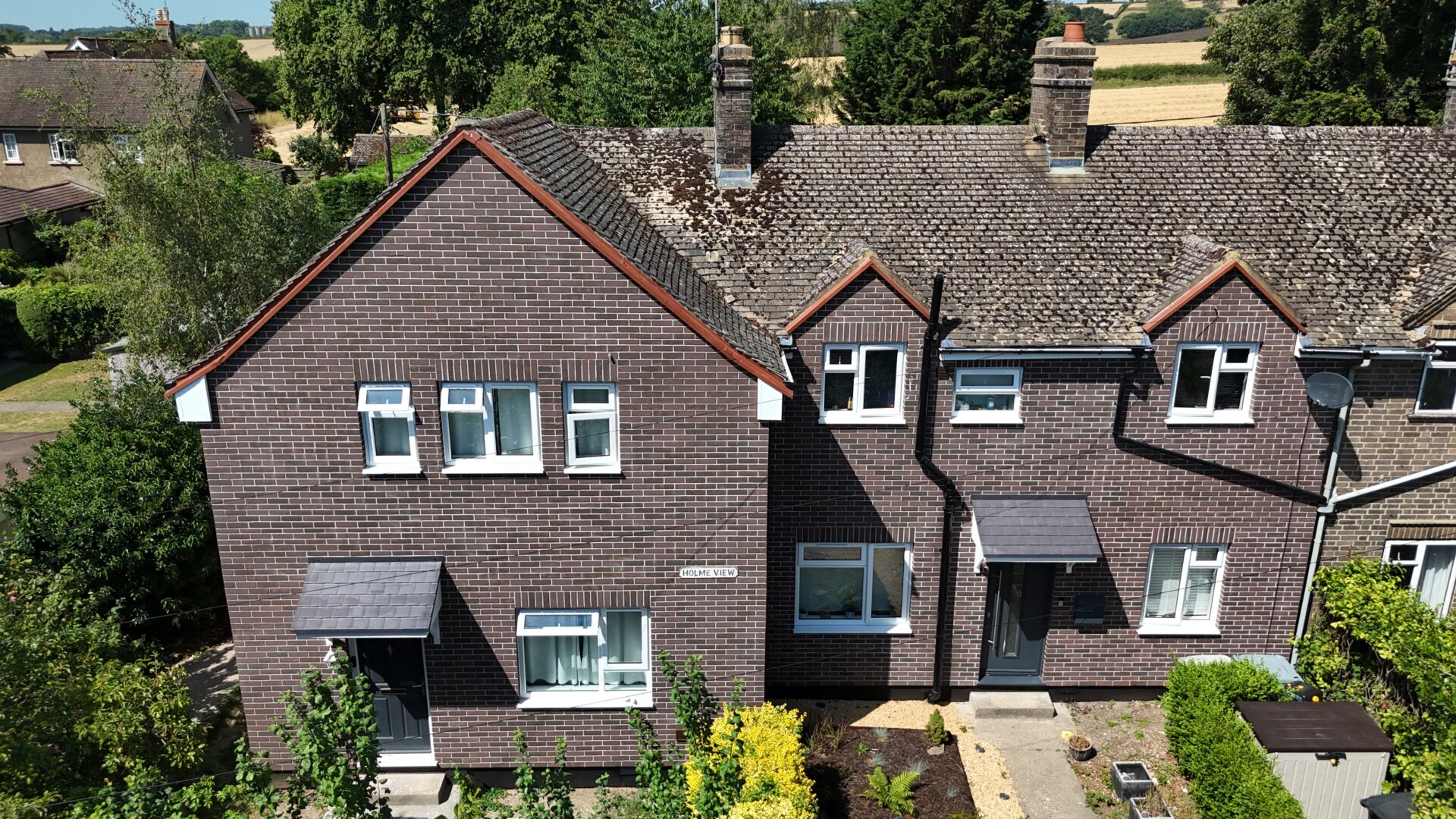
This scheme was for four houses on behalf of Morgan Sindall for the client Longhurst now known as Amplius. These are social houses with new insulation and a skilful artistic finish providing energy efficiency and an aesthetic improvement.
The properties in question would all be occupied during the works. They were located at:
- 1 Holme View, Tinwell
- 2 Holme View, Tinwell
- 1 Wellan, Tinwell
- 3 Wellan, Tinwell
Properties & Specification
The buildings’ original construction utilized traditional materials and a solid brick build, previously a brick external façade now a brick effect render façade. The depth of the wall being 225mm in thickness provided a suitable substrate to apply the external Stuctherm Artbrick systems. After completion the 110mm Mineral Fibre system would achieve a U-value of circa 0.28 W/m²K, based on 230mm solid brickwork wall constructions with a starting U-value of 2.02 W/m²K.
The specification called for the installation Structherm Artbrick built up with 110mm dual density board. This would improve the thermal performance of the properties while simultaneously enhancing their appearance.
Structherm’s ArtBrick EWI system was used to match the existing brickwork. The system conforms to the latest building regulations and is used on traditional built properties, dramatically improving the thermal performance, boosting energy efficiency, reducing the cost of heating bills and providing a modern and fresh appearance.
The work was to be funded under the Social Housing Decarbonisation Fund so it had to be completed by a Trustmark registered installer, and according to the requirements of the PAS 2030 / 2035 standards. Other works conducted as part of the same scheme included renewed windows and doors and new air source heat pumps. As this project was seeking and achieved PAS funding this meant record keeping was paramount and adherence to specification/design/retrofit assessment was essential. PJMear provided all the necessary documents to aid the project in support of the PAS standard including pre-installation building inspections, SWIGA insurance backed guarantees, Handover documents, image reporting with meta data stamps and claims of compliance.



Design & Installation Challenges
The design by Marsh Grochowski architects and the specification provided by Structherm, provided an excellent and comprehensive strategy for these works. The existing structure required structural repairs. Repairs included concrete repair and helibar installation courtesy of Leviat. PJMear undertook these repairs as well as the insulation and decoration needs.
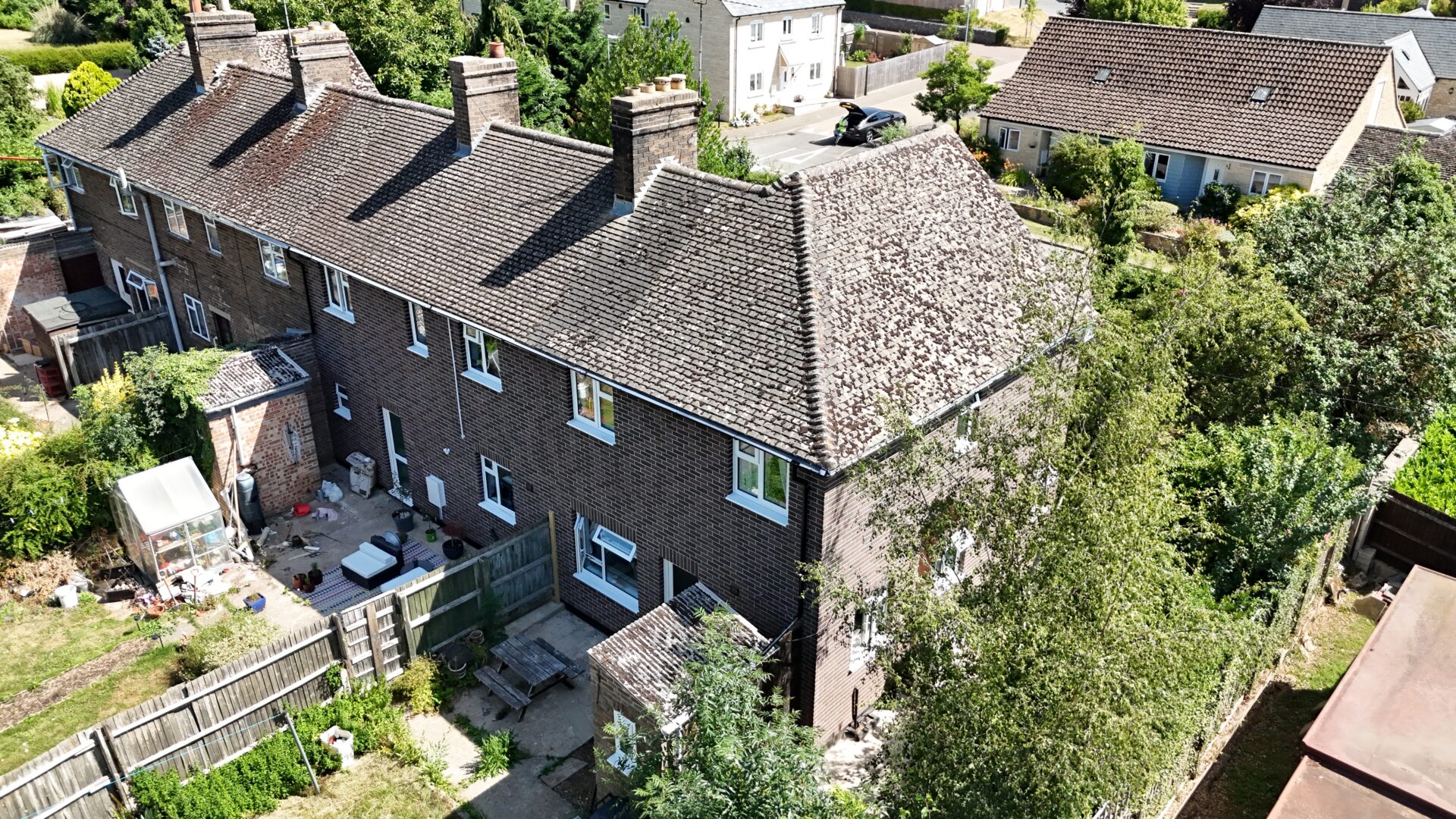
The removal of all fascia and soffits was necessary to comply with PAS 2035 standards as insulation was necessary beyond the eaves to create insulation continuity with the loft insulation to eliminate cold bridging. PJMear undertook the removal and replacement of all facias and soffits.
PJMear also needed to remove all soil and waste pipes to install a back to source piping methodology to eliminate joints, in keeping with PAS standards. All rainwater goods were removed and refixed to the new fascade. Below DPC works were also carried out with PJMear using a HD insulation board decorated with render and bitumen paint for a clean crisp insulated finish.
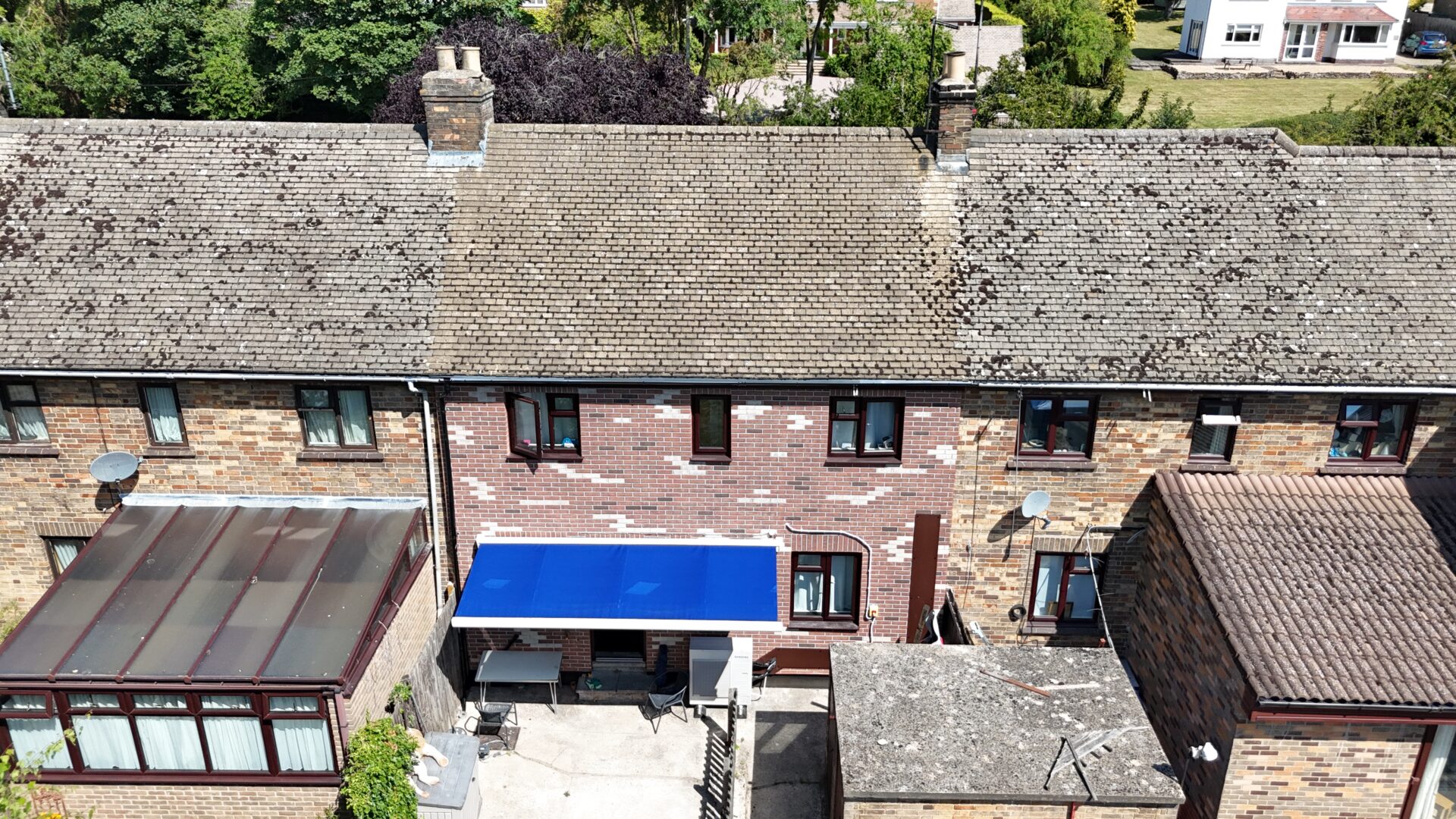
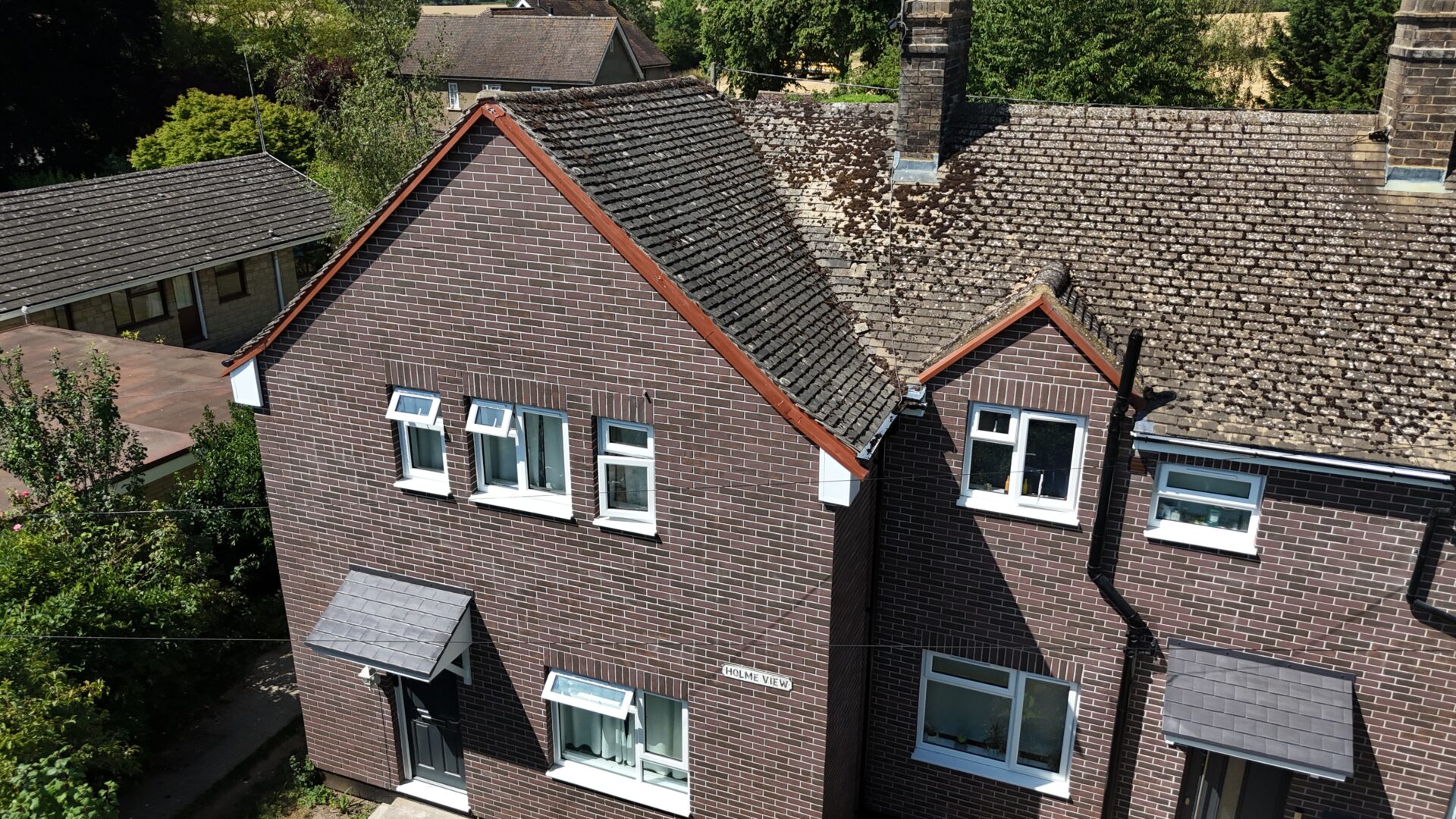
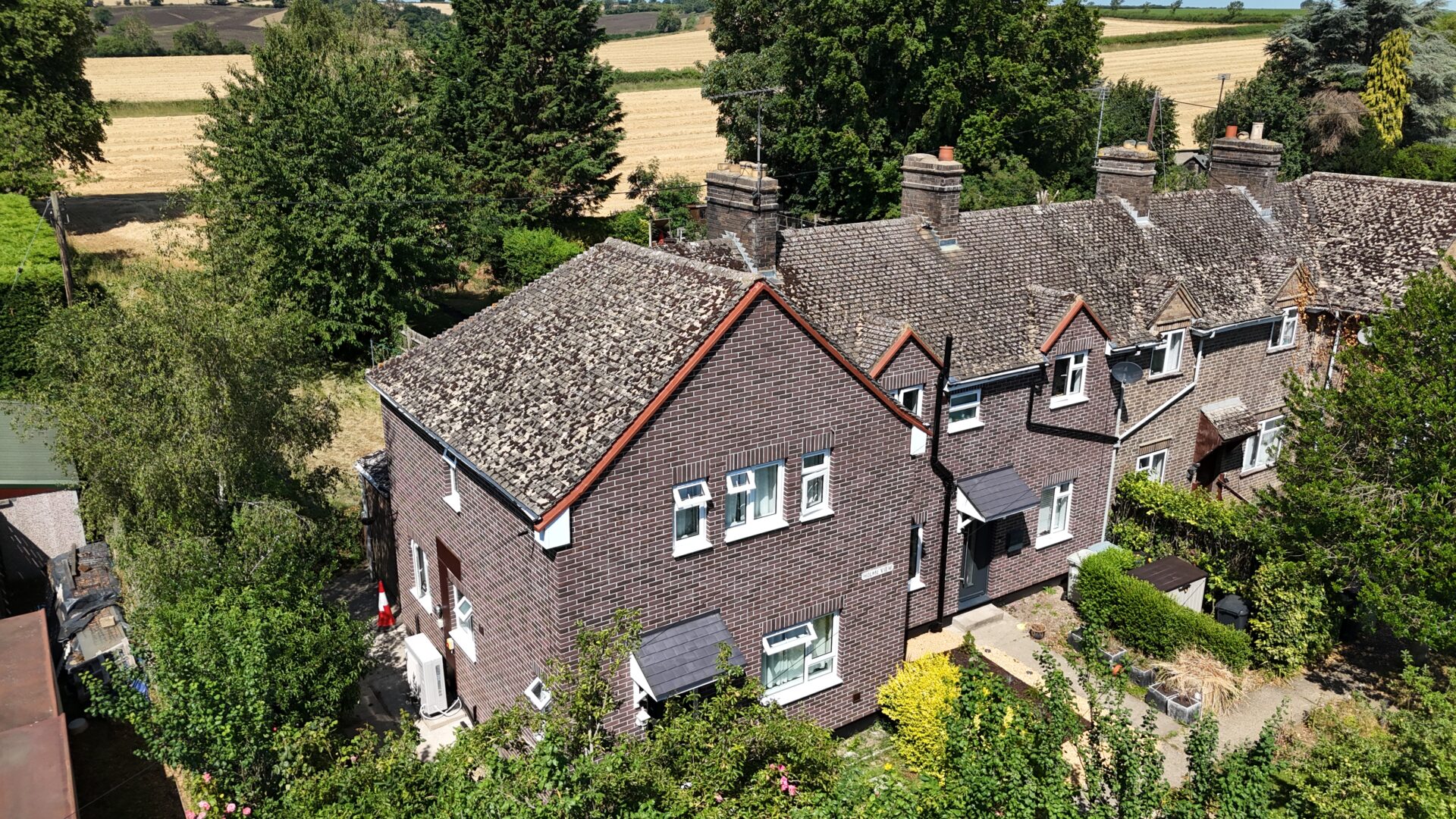
The project was in a rural area with only a small number of properties, each with different brick stocks to be matched using Structherm ArtBrick. Using the brick effect render of the structherm specified system, each layer was applied as per installation guidance. The final colours were selected to match the surrounding properties on the street. With a red base, varying shades were introduced for as authentic as possible a match. The selection of bricks for tinting was down to PJMear’s artistic choice under the direction to create an in keeping aesthetic with surrounding houses.
Measured Results
The client required that the treated buildings should display excellent thermal performance. The thermal performance of the walls was achieved using the Structherm Artbrick system with 110 mm insulation. The 110mm Mineral Fibre system achieves a U-value of circa 0.28 W/m²K, based on 230mm solid brickwork wall constructions with a starting U-value of 2.02 W/m²K.
The client also specified that the system should achieve an A2 ‘reaction to fire’ classification, which the installed system did.
The EWI system has also provided a significant aesthetic improvement to the area. These four homes are a shining example of what brick effect render can achieve, a warm insulated home without a design interruption to the aesthetic of the area.
Project Completion
The scheme was completed on schedule, to the satisfaction of the client and residents.
As a result of the works, residents are now enjoying warmer homes, better living conditions and savings on their routine energy bills. The work has helped to improve the general appearance of the neighbourhood, making it look cleaner and brighter and, as an additional benefit, it has also helped to provide a degree of acoustic insulation.
Quote
“Structherm’s EWI system played a pivotal role in the successful delivery of our Wave 2.1 SHDF retrofit programme. Its robust performance, design flexibility, and thermal efficiency enabled us to significantly improve the energy performance of some of the UK’s most challenging housing stock. The Structherm team provided excellent support throughout the design process, with responsive customer service that ensured smooth delivery on site. More than just a compliant solution, it was a pleasure to work with a product and team that align so well with our fabric-first approach and resident-focused outcomes. This collaboration has helped us reduce heat loss, improve comfort, and lower energy bills, making real progress toward net zero while enhancing lives.”
Mustafa Mustafa, Head of Decarbonisation, Morgan Sindall Property Services
The EWI system has also provided a significant aesthetic improvement to the area. These four homes are a shining example of what brick effect render can achieve, a warm insulated home without a design interruption to the aesthetic of the area.